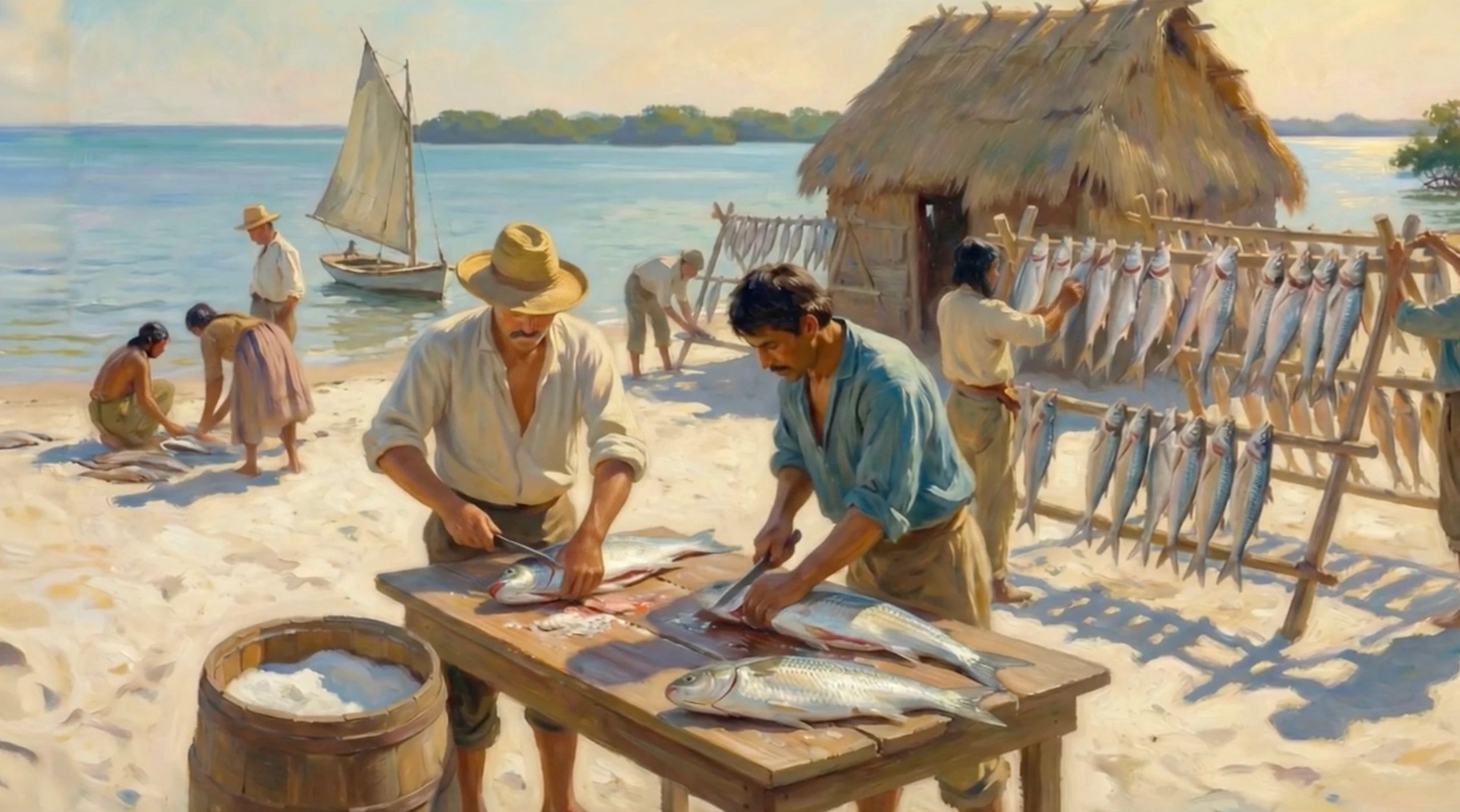
Maximo and the Fishing Ranchos of Tampa Bay will use emerging AI tools to create a short historical drama based on the life of Maximo Hernandez, a Spanish fisherman who established a fishing rancho on Tampa Bay in the 1840s. The former rancho site now includes a City of St. Petersburg park, a marina, and part of Eckerd College. The film will use extensive primary-source research and guidance from experts and descendants to develop historically accurate imagery and animation.

Maximo was a fisherman, a guide for the U.S. Army, a husband and father, and ultimately the owner of a fishing rancho. Fishing ranchos were seasonal settlements where fishermen from Havana harvested fish in Tampa Bay and sent dried, salted, and live catch to the Havana market. Spanish fishermen intermarried with Indigenous people of Florida, including descendants of the Calusa and, later, Seminoles. These unions created a distinctive hybrid society identified in historical records as “Spanish Indians” or “Spanish Seminoles.”
Maximo married a Native American woman and had a family with her. Research indicates that his wife and three children were removed to the western territories under the federal Indian removal policy of the 1830s. Maximo and others signed an 1838 petition to the U.S. Army requesting the return of their removed “Spanish Indian” families. The petition was denied. He was later listed in census records as a widower.
In 1847, Maximo married Dominga Montes de Oca. A year later, their son was born, Maximo died, and the “Gale of ’48” struck the Tampa Bay area, destroying the rancho. After years of effort, Dominga gained title to the land Maximo had claimed.
Dominga sold the land twice: first to the notorious plume hunter Jean Lechevalier and later to a Baltimore investor group. After the property remained dormant for years, it was purchased by Roy Hanna, St. Petersburg’s postmaster and later sold to the City of St. Petersburg. Maximo Park is the legacy of that history.
The Maximo Project will culminate in a series of public events at Eckerd College in February 2027, including an exhibition of images and archaeological artifacts, a film screening and discussion with descendants, and a site visit to Maximo Park.
Maximo and the Fishing Ranchos of Tampa Bay is supported by Florida Humanities, the National Endowment for the Humanities, and the Jacarlene Foundation. Additional funding is provided from a Level Up grant from the City of St. Petersburg. The Alliance for Weedon Island Archaeological Research and Education (AWIARE) and Eckerd College are the project’s community partners.


We use cookies to analyze website traffic and optimize your website experience. By accepting our use of cookies, your data will be aggregated with all other user data.